

A.utism I.ntegration: AI-Powered Educational Workshops in Gdynia
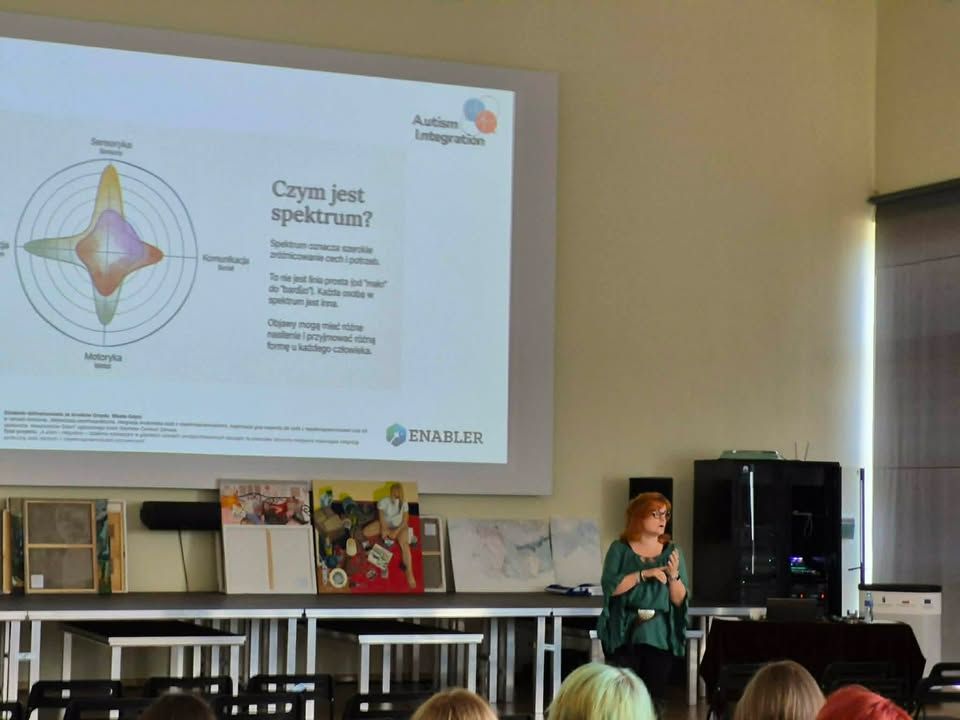
Throughout March and April, we carried out the project "A.utism I.ntegration – educational activities in Gdynia secondary schools based on the potential of artificial intelligence to support the social integration of young people with cognitive disabilities."
This was a vital period for us, spent working with youth and discussing neurodiversity, the autism spectrum, peer relationships, communication, empathy, and our responsibility toward one another.
The project was born from the conviction that school should be a place where every young person feels safe, noticed, and treated with respect. In daily school life, individuals on the autism spectrum and those with other cognitive disabilities often face misunderstanding, stereotypes, exclusion, or loneliness. This frequently stems not from malice, but from a lack of knowledge, experience, and the right tools for dialogue.
To address this, we conducted educational workshops for students in Gdynia's secondary schools. We discussed what the autism spectrum and neurodiversity are, and why a person cannot be reduced to a single label. We debunked myths, examined everyday school situations, and explored how small changes in communication can genuinely improve classroom relationships.
A key element of our work involved a chatbot—a simulator designed to mimic conversations with a teenager on the autism spectrum. This tool allowed students to safely experience how messages, jokes, metaphors, peer pressure, or ambiguous questions can be perceived differently. This enabled students not only to gain knowledge but, more importantly, to pause, analyze their own reactions, and better understand another person's perspective.
During subsequent meetings, students mapped the needs of their peers with cognitive disabilities and brainstormed changes for their schools, classrooms, and daily interactions. Ideas included information campaigns, student council initiatives, classroom communication guidelines, more attentive responses to exclusion, and efforts to strengthen a sense of belonging.
An important complement to the workshops was an information and education campaign for World Autism Awareness Day. We wanted the topic of neurodiversity to be present not only in class but throughout the school environment—in hallways, in conversations, and in the reflections of students and teachers.
We thank all the schools, teachers, educators, and students for their openness, attentiveness, and willingness to discuss topics that truly matter. We are grateful for every question, every reflection, and every moment spent considering how we can be more supportive of one another.
We believe that integration does not begin with grand declarations, but with daily gestures: calmer conversations, greater patience, an attempt at understanding, inviting someone into a group, withholding judgment, and a readiness to see a person for who they truly are.
This project demonstrated that artificial intelligence can be used not just as technology, but as a tool for building empathy, reflection, and dialogue. Above all, it showed that young people want to talk about diversity, relationships, and mutual support—they just need a safe space to do so.
Thank you for being part of this change. 💙
Gdynia Health Center
These educational activities are carried out as part of the project "A.utism I.ntegration – educational activities in Gdynia secondary schools based on the potential of artificial intelligence to support the social integration of young people with cognitive disabilities."
Funding amount: 7,000.00 PLN.