

We Are All a Little Bit 'In Our Own Way'
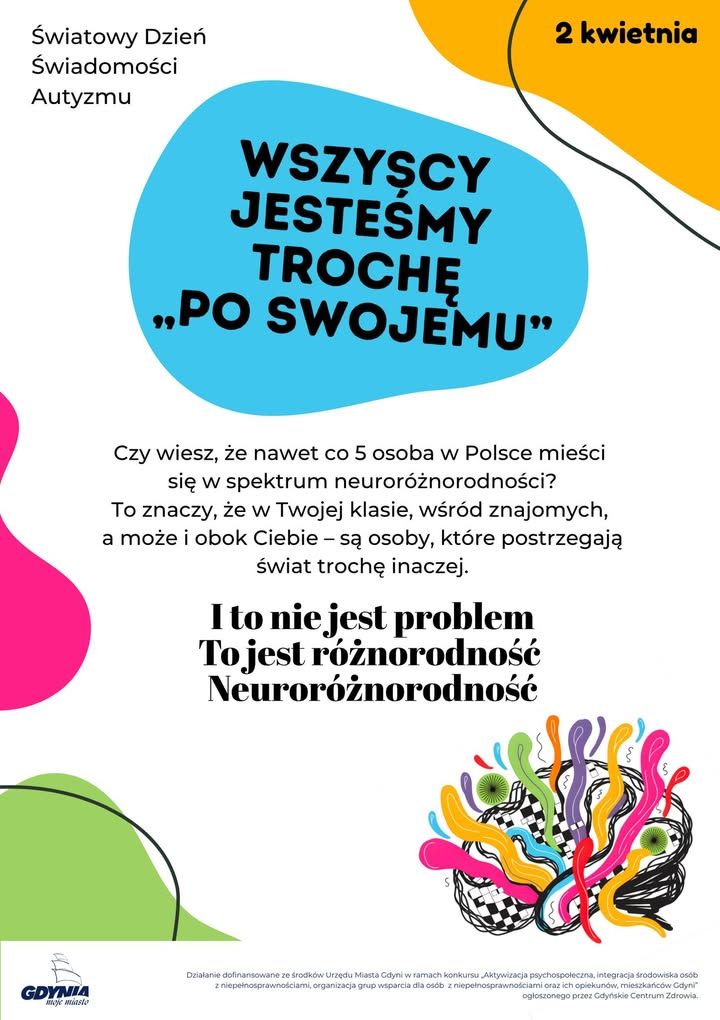
Today is World Autism Awareness Day. It is a good moment to pause and look at what the daily lives of young people on the spectrum are really like—without simplifications, stereotypes, or labels that often do more harm than good.
For three years, our foundation has been implementing initiatives aimed at young people on the spectrum and their peers. Together, we create a space for getting to know one another, understanding, and building relationships. Because integration does not begin with grand words, but with small shifts in thinking.
Let us start with the myths that still circulate in our society.
Common myths about autism:
First, there is the belief that people on the spectrum do not want contact with others. In reality, many of them deeply need relationships, but on their own terms—often different from those socially accepted. Difficulty does not mean a lack of need.
Another myth is that autism is always "visible." Meanwhile, the spectrum is very broad. There are people whose challenges are not immediately apparent, yet they face immense effort every day to navigate the social world.
There is also a common belief that people on the spectrum do not feel emotions or feel them less. This is untrue. Emotions are present—sometimes very intense—but their expression may look different and be less readable to others.
Another harmful myth equates autism exclusively with exceptional abilities. While some individuals do have special talents, many need support in daily functioning rather than expectations of "superiority."
Some also believe that people on the spectrum lack empathy. However, many studies and experiences show that empathy is present, but it may take a different form—less intuitive, more cognitive, and requiring time and understanding.
Some still believe that autism can be "cured" or that it is something that needs to be "fixed." Autism is not a disease; it is a different way of perceiving and processing the world.
We also often hear that "everyone is a little bit on the spectrum now." Such statements trivialize the real difficulties of autistic people and deny them the right to support.
Finally, there is the myth that integration "just happens." It does not. It requires conscious action, education, and a willingness to change perspectives.
What do young people on the spectrum really need?
Above all, they need understanding—one that is not based on judgment, but on an attempt to see the world through their eyes. This means patience, mindfulness, and a readiness to ask questions instead of making assumptions.
They need predictability. Clear rules, transparent communication, and a daily structure provide a sense of security and reduce tension.
Acceptance of diverse communication styles is vital. Not everyone has to maintain eye contact, speak in a specific way, or react "typically." Different does not mean worse.
People on the spectrum need sensory space—the ability to calm down, limit stimuli, and adjust their environment. Noise, light, or crowds can be a real overload, not an "exaggeration."
They need relationships that do not require pretending. Connections where they can be themselves without the pressure to conform to rigid social norms.
Peer support is also key. It is within peer groups that exclusion most often occurs, but it is also where the greatest change can happen. Educating neurotypical young people is just as important as supporting those on the spectrum.
Neurodivergent individuals also need the right to be different without having to constantly explain themselves. Their needs should not be treated as "whims," but as real aspects of their functioning.
It is also important to have the opportunity to develop passions and strengths without limiting them solely to "therapy." Life is not just about working on difficulties.
Finally, they need a system that sees them. Schools, institutions, teachers, and educators should be prepared to work with diversity rather than expecting the young person to adapt to everything.