

We Read the Pollster Institute Report: Poles and AI 2026
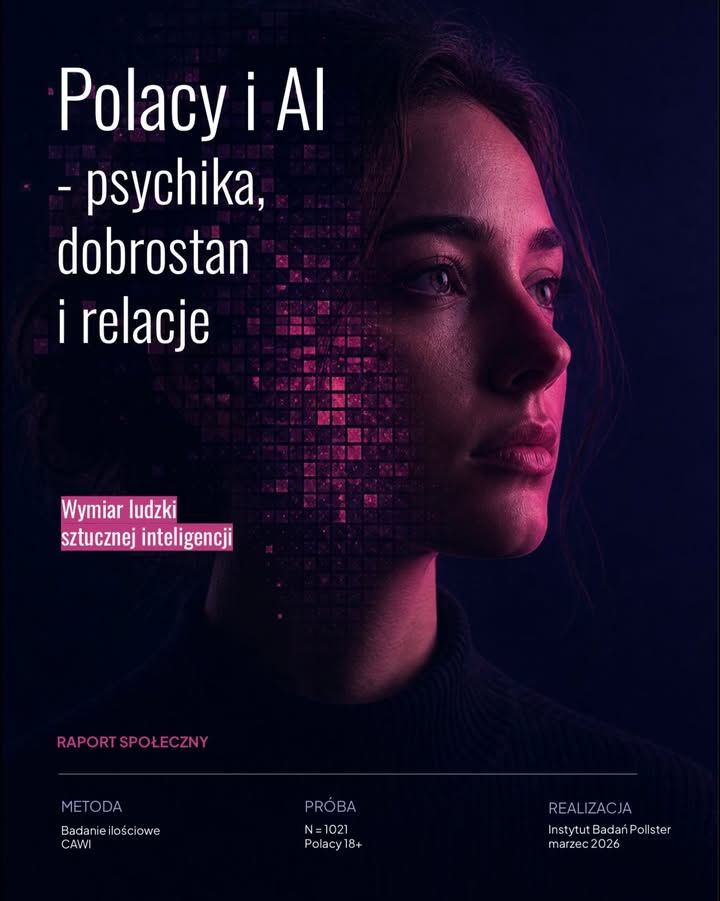
We have read the latest report from the Pollster Institute, "Poles and AI 2026," and it certainly gives us food for thought.
57% of Poles admit they cannot distinguish between content generated by AI and that written by a human. Nearly half (47%) have already fallen for something that turned out to be a falsehood produced by an algorithm. 79% fear that someone might use AI to create a fake image of them or clone their voice—this is the highest figure in the entire study, surpassing even the fear of job loss. My face, my voice, my photo—this is the level at which this anxiety is most palpable.
One figure in particular stands out: 56% of Poles consider AI a great achievement for humanity, yet only 37% are happy to be living in its era. It is possible to admire something while simultaneously feeling distinct discomfort with it—and that is likely where most of us find ourselves right now.
One in four young AI users (aged 18–29) turns to it to improve their mood. One in four consults a chatbot about conflicts with loved ones. 21% of active users feel safer discussing problems with a chatbot than with another human being. The authors of the report note that AI is more likely filling an existing gap in relationships rather than creating one, which suggests we should ask where that gap came from in the first place.
At the Enabler Foundation, we work with children and teachers in primary schools. We hear a lot about the skills of the future—tools, automation, and AI. This report serves as a reminder that the ability to verify what we have just read and the readiness to engage in conversations that cannot be delegated to an algorithm are just as important.
Link to the report in the comments.